
Models and Billing
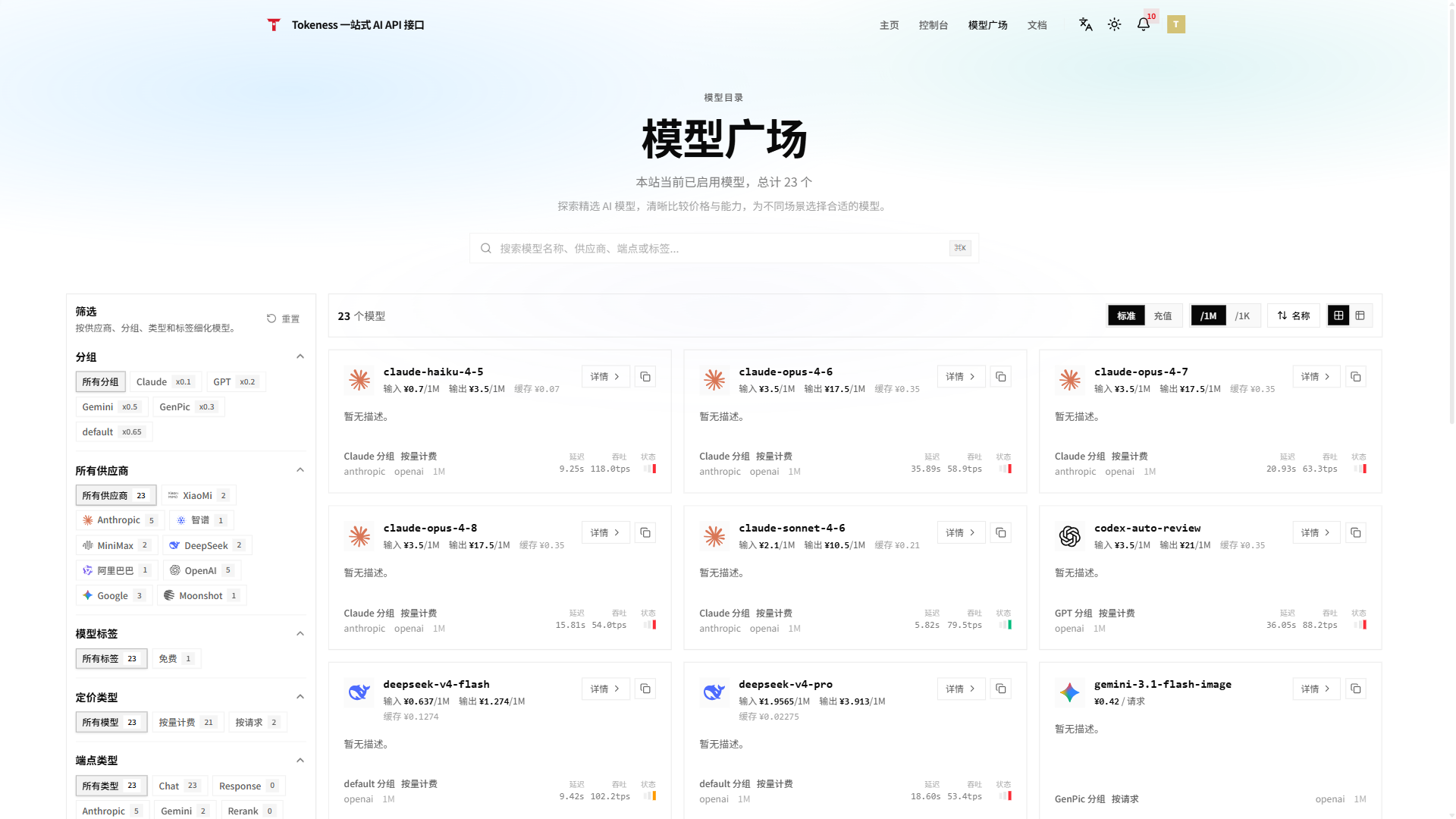
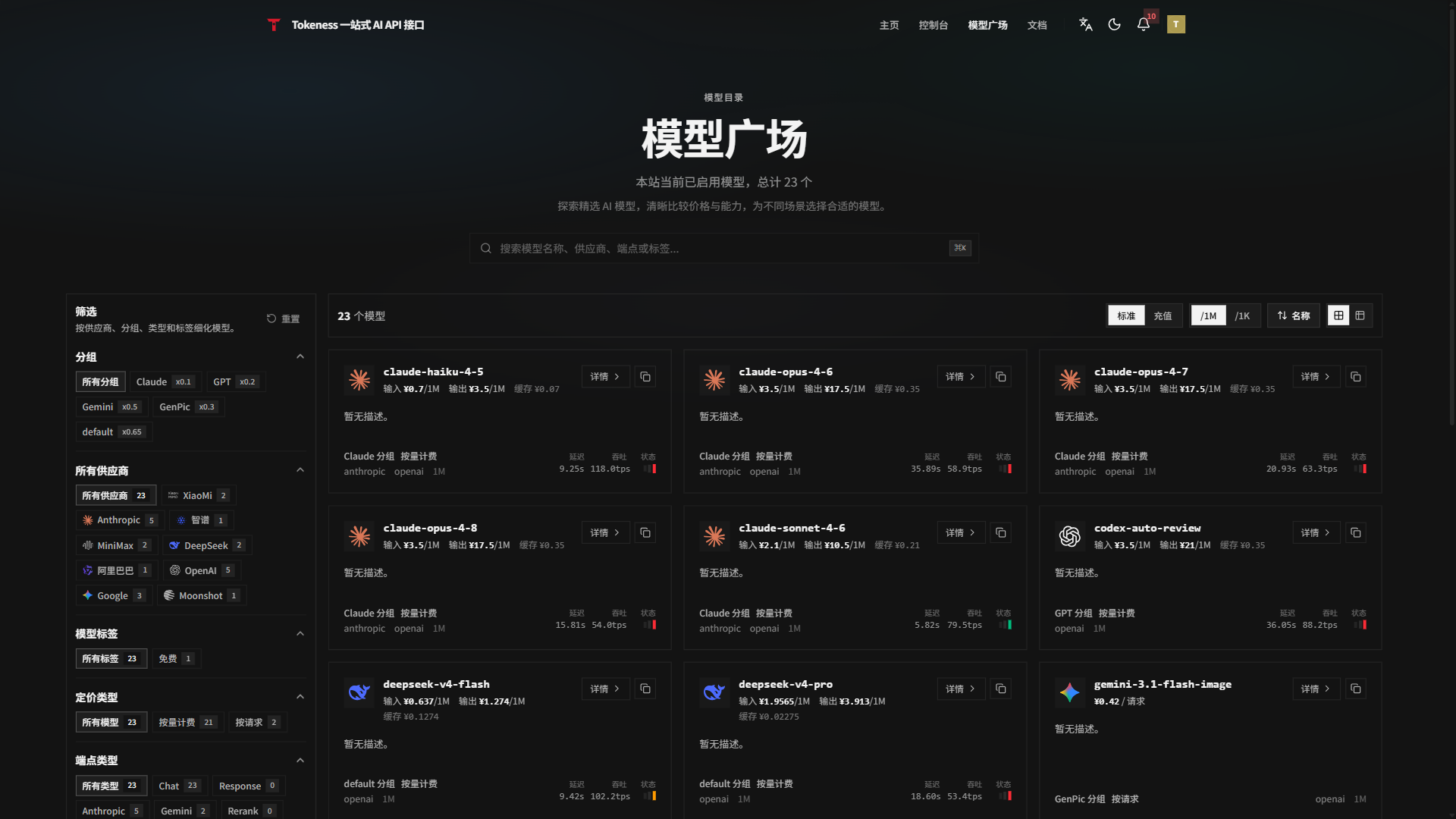
Tokeness uses a prepaid billing model. Each API call is deducted based on actual consumption. Model prices are authoritative in the console, the model marketplace, or a formal quotation.
Billing Basis
| Item | Description |
|---|---|
| Payment method | Prepaid — top up before calling |
| Deduction method | API call consumption is deducted from the account balance in real time |
| Balance validity | Balance remains valid long-term; specifics are subject to platform policy |
| Price unit | Input and output prices are shown per 1M tokens |
| Exchange rate assumption | Current channel price tables are converted at 1 USD = 7 CNY |
Channel Examples
The channel price table includes the following common categories:
| Type | Description |
|---|---|
| Official-relay channel | Shown at official API list price or with zero markup |
| Discount channel | Some models such as Claude and GPT have different discount channels |
| Domestic models | Domestic models are shown at the Tokeness channel price based on the official list price |
| Partner | After reaching a monthly volume threshold, discounts can be stacked on top of non-official-relay prices |
Price changes
Model supplier prices, exchange rates, and channel policies may all change. Public documentation only describes the billing method and does not commit to fixed prices.
Viewing Consumption
After making calls, you can view the following in the console:
| Page | Purpose |
|---|---|
| Overview | View account and call summary |
| Data dashboard | Analyze model call and consumption trends |
| Usage logs | Inspect individual request status, model, and cost |
| Wallet | View balance and top up |
Cost Control
- Use a separate API key for each project.
- Set a smaller quota for development and test environments.
- Run high-consumption workflows with a small sample first.
- Review usage logs and the data dashboard regularly.
- Split keys by client for channel or client projects.